



The lake of Annecy, one of the purest in Europe, is located in Haute Savoie, just like Lake Geneva. It measures 14.6 kilometers with a width of 800 to 3300 meters, making it the second largest lake in France after Lake Bourget. It consists of two distinct basins, the “Grand” and the “Petit lac,” which separate the lake into two between Roc de Chère and the Château de Duingt.
Natural sites nearby
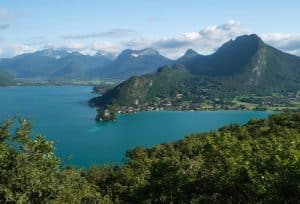 For a unique viewpoint of the lake, we recommend taking the beautiful walk to the Cascade d’Angon. The hike to Roc de Chère allows you to discover this nature reserve overlooking the lake. At the end of the “Petit Lac,” you can visit the Nature Reserve at the End of the Lake.
And not far away, the natural site of the cave and waterfall of Seythenex is worth a detour. Finally, the Gorges du Fier is an impressive canyon where you walk on a walkway 25 m above the river. To the north of Annecy, you can spend a pleasant day by Lake Balme.
Surrounding mountains
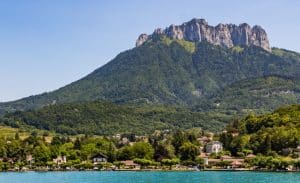 The sumptuous setting of Lake Annecy is surrounded by mountain ranges that seem to protect it. We suggest discovering them starting with Le Parmelan near Annecy-le-Vieux, which borders Mont Veyrier, a mountain favored by locals and tourists for hiking.
Next to it, Les Dents de Lanfon is a much steeper massif that neighbors the majestic mountain of La Tournette. After that, it’s the end of the lake in the plain. On your way back to Annecy, you will see the Bauges Massif and then the mountain favored by locals: Le Semnoz.
These massifs present different levels of difficulty, thus adapting to the practice of all.
Beaches
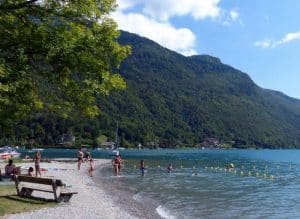 The guide takes you on a tour of Lake Annecy to discover its most beautiful beaches and the surrounding villages to visit. The tour of Lake Annecy is 40 km long, and you can do it by car or by bike, as a large part of the route has bike paths. Be careful, in summer, the path can be relatively busy, so don’t forget your helmet if you go by bike!
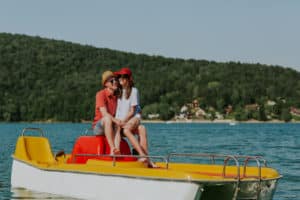
If you prefer to enjoy the lake in a more tranquil way, renting a boat or a pedal boat is an excellent option. You can explore hidden coves, less frequented, and easily access the ports of the villages for a little stop.
The fauna and flora of the lake
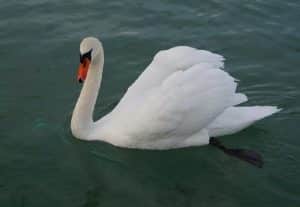 Lake Annecy, the second largest glacial lake in France, is a true haven of biodiversity. Its ecosystem is home to a fauna typical of Haute-Savoie, particularly rich in aquatic species. The reed beds that border the lake are a sight to behold and provide an ideal habitat for various bird species. It is in these areas that swans, mallards, and great crested grebes find refuge.
Lake Annecy, thanks to its great purity, allows magnificent aquatic meadows to thrive. These meadows are essential to the ecosystem as they serve as a refuge and breeding ground for fish such as perch and whitefish. Meanwhile, the pike hunts in these meadows, contributing to the natural balance. The lake is also a popular spot for fishermen, especially for trout and char, which are sought-after species in these crystal-clear waters.
There are also crayfish present in Lake Annecy. These small crustaceans are particularly appreciated in cooking, by the many restaurants lining the lake, as well as by fishing enthusiasts.
Activities on Lake Annecy
Lake Annecy is a true playground for water sports enthusiasts, offering many options throughout the year.
- Sailing and regattas: Sailing clubs regularly organize races, creating friendly moments that continue in the clubs of Annecy or Sévrier.
- Scuba diving: This activity is growing rapidly, with an unmissable experience for divers: visiting the wreck of the France, the last steamship to navigate the lake. Divers can also explore the large meadows and observe a variety of fish, such as whitefish, pike, trout, char, and perch.
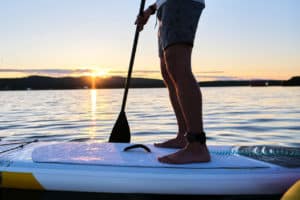
- Paddle : Stand-up paddleboarding has been gaining popularity for several years. Many competitions are organized throughout the year, even outside the summer season. Among the most notable events is the traditional Glagla Race, an unusual paddle race that takes place every January on Lake Annecy.
- Water sports: Water skiing, wakeboarding, rowing, and Dragon Boat are practiced almost all year round (provided you have a good wetsuit!).
- Windsurfing: Although Lake Annecy does not benefit from strong and consistent winds, favorable weather conditions attract enthusiasts of this sport.
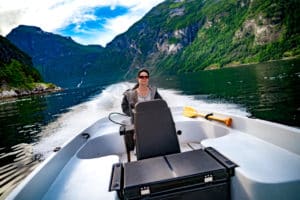
- Boats and pedal boats : Renting boats, with or without a license, or pedal boats is an excellent way to discover the lake and its surroundings. You can enjoy a family day, have a picnic in the middle of the water (remember to pick up your trash!), admire the shores of the lake, and swim in some of the purest waters in Europe. Rental companies by the lake generally open their doors from April/May depending on the years and weather conditions.
- Fishing : The lake and surrounding rivers are prime spots for fishermen, whether from a boat or the shores. Note that a day permit is required to practice this activity.
- Cruises: You have the option to take a cruise on Lake Annecy. By the Gardens of Europe, at the Bayreuth quay, you will find large ships belonging to the Compagnie des Bateaux du Lac d’Annecy, which will allow you to tour the lake. The most impressive, “Le Libellule,” allows you to have lunch or dinner during the cruise. Reservations can be made online or on-site at: 2 place au Bois, 74000 Annecy. Additionally, private companies also offer more intimate cruises on smaller boats for a more personalized experience.
During tourist seasons, it is advisable to prioritize public transport or biking to get to the lake, especially by using the greenway that circles the lake. Indeed, summer crowds generally lead to significant traffic jams, and parking is often (very) difficult to find. Many bike rentals are available in Annecy and its surroundings.
Regulations and safety
It is essential to respect the navigation regulations, which include areas prohibited for navigation, such as the nature reserve at the end of the lake and the reed beds. Speed is limited near the shores, and safety checks are frequent, especially by the National Gendarmerie boat. Finally, given the sudden and violent storms, it is crucial to check the weather before heading out on the lake.
See the fireworks
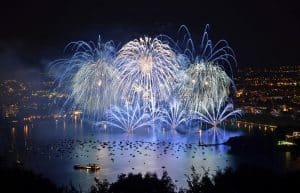 The lake is a great site for fireworks displays, with lights reflecting in the water to create unique moments. Every year on the first Saturday of August, the Lake Annecy Festival, which is a huge fireworks display, attracts over 200,000 spectators to the city. The theme, the pyrotechnician, and the music change each year.
On July 14, many municipalities around the lake celebrate the National Day with fireworks launched along the lake. Specifically, in Annecy-le-Vieux, at Albigny Beach, the fireworks are usually launched on July 13.
All the info in the tourist offices
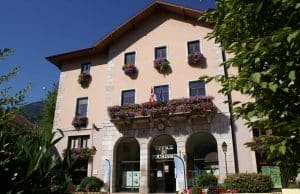 Depending on your accommodation around Lake Annecy, you can inquire at the 6 tourist offices available.
It is a source of quality information with advice and practical information according to your needs and expectations during your vacation.
The history of the lake’s formation
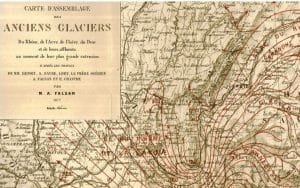
More than 15,000 years ago, the formation of Lake Annecy was made possible by the melting of the great Alpine glaciers, coming from the surrounding mountains and the springs we know today.
The lake is the source of the river Thiou, which originates in the heart of the Old Town, behind the Town Hall, where the embarkation point is located. This is where the famous boats such as the Libellule, the Cygne, and the Savoie circulate all year round for the pleasure of visitors. The Thiou then flows into the Fier, which heads towards the Rhône.
Depth
With a maximum depth of 82 meters, an average of 41.5 meters, and evolving at an altitude of 466 meters, Lake Annecy is fed by the Bourbioz (underground source), the Bornette, the Laudon, the Biolon, as well as the Ire and the Eau morte, which would be, according to the legend, responsible for having submerged a village in the 15th century!
Temperature
The temperature of Lake Annecy varies greatly depending on the seasons. In winter, the water temperature of the lake generally ranges between 2° and 8°, while in summer, it reaches 18° to 26°. The lake’s temperature is mainly influenced by precipitation and outside temperatures.
Thus, temperature readings differ from year to year. In the past, the lake was completely frozen in winter, but this phenomenon tends to diminish over the years, and it now only partially freezes.
A recent international study shows that lakes are warming by 0.4 degrees per decade due to climate change. Thus, lakes have lost 5.5% of their surface oxygen and 18% in deep waters over 40 years. This decrease is 4 to 9 times greater than the decline in oceans.
The main consequence is that the survival of fish is no longer assured beyond 20 meters deep between September and November. This leads to a decrease in biodiversity. Major alpine lakes like Lake Bourget and Lake Annecy are affected.
Other major lakes in Savoie
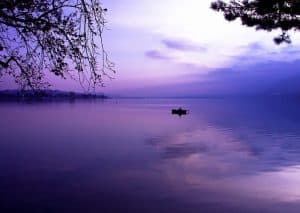 The largest lake in Western Europe is Lake Geneva. It is located between France and Switzerland. You can visit cities like Geneva, Lausanne, Montreux, and Évian-les-Bains on its shores. The Lake Bourget is also an alpine lake located in Savoie. We recommend discovering Aix-les-Bains and the Abbey of Haute-Combe.
Smaller, the Lake Aiguebelette is also located in the Savoie department. It houses a water recreation center.
Swimming lakes
Apart from the most well-known lakes, Haute-Savoie is full of less frequented bodies of water, but just as welcoming for a summer swim. These lakes offer incredible landscapes and a multitude of activities. Among them are Lake Passy and Lake Montriond.
To discover other swimming spots, feel free to check out our dedicated article: 5 lakes & bodies of water in Haute-Savoie for swimming outside of Lake Annecy and Lake Geneva
Photos of Lake Annecy


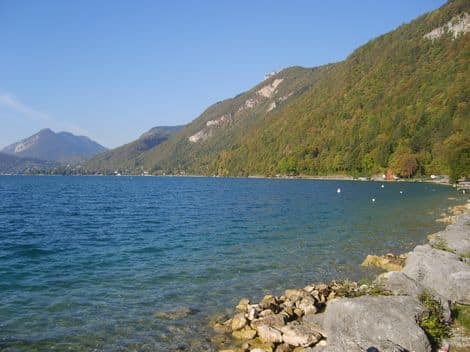
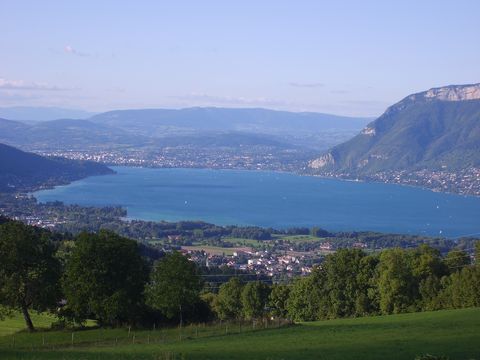
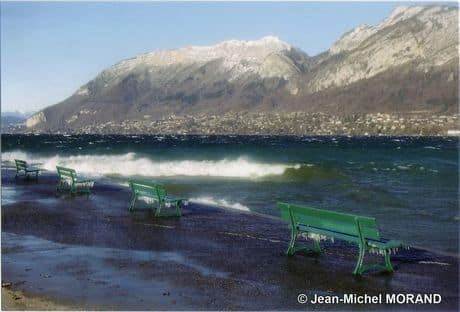
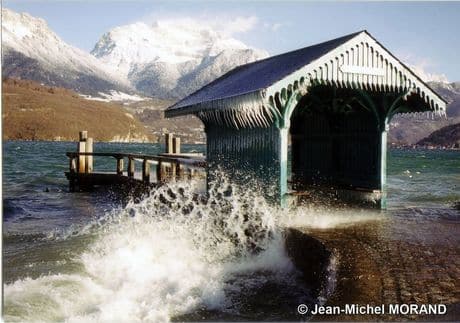

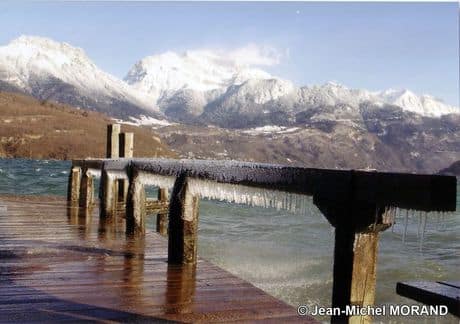
The last 4 photos on this page are by photographer Jean-Michel Morrand, published with his permission and taken from his site: eos100.photos.free.fr


