



In Annecy or elsewhere in Haute-Savoie and Savoie, cheese is an essential food in local dishes and customs. More than a passion, it is a tradition. We invite you to discover or rediscover the most famous cheeses, as well as those that are less known but still deserve recognition.
Savoie cheeses, a production rooted in local culture
Whether in Haute-Savoie or Savoie, cheese production follows ancestral methods. These methods ensure the quality of the products. During the summer, the cows head to the alpine pastures, where they enjoy rich grass that enhances the flavor of their milk. In winter, the cattle benefit from various quality fodders that provide them with a varied and rich diet.
More than 2,000 producers in Savoie
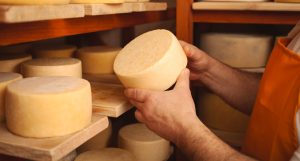 Savoie has more than 2,000 producers, amounting to 325 million kg of milk per year. This represents 1.5% of national milk production and 15% of cheese production. In total, 32,000 tons of quality cheese are produced every year in Savoie and Haute-Savoie.
Cheeses made from raw milk
In Savoie, the lactic flora is not reduced before the cheese-making process. Therefore, it is made from raw milk. Furthermore, the milk is generally processed within 24 hours of milking. This is a way to preserve the microbial flora that is naturally present in the milk. Thus, the multiple microbial species present contribute to giving character to the cheese, as well as its personality.
Essential Savoie cheeses
Among all the cheeses made near Annecy, some are more emblematic than others. We invite you to discover them.
The Reblochon
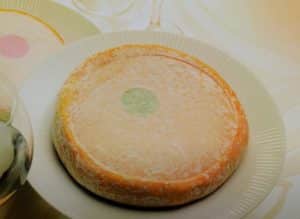 Contrary to what many think, the Reblochon is indeed spelled as such and not “Roblochon.” This mistake is still prevalent and continues to annoy the elders.
The Reblochon, therefore, is a cylindrical cheese that is particularly creamy. It weighs about 500 grams and is mainly produced in the Val d’Arly and around Thônes. It is one of the least fatty cheeses, containing only 27% fat.
Our recipe idea: polenta with Reblochon.
Allow 12 minutes for preparation and 15 minutes for cooking. For 4 people, plan for half a Reblochon, a packet of polenta, 500 grams of porcini or chanterelles, 1 clove of garlic, 20 cl of fresh cream, and 20 g of butter.
The Abondance
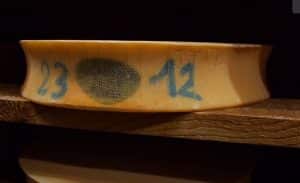 The Abondance cheese has the shape of a flat cylindrical wheel. Its rind is both amber and smooth. Its weight varies between 6 and 12 kg. To identify the producer, simply refer to the casein plate present on the heel of the Abondance.
If it is red and square, the cheese was made in a dairy. If it is green and oval, it is a farm cheese.
Our recipe idea: Berthoud.
Allow 15 minutes for preparation and 10 to 15 minutes for cooking. For two people, you will need: 360 g of Abondance, 2 to 4 cl of Port, pepper, a clove of garlic, nutmeg, and 6 to 8 cl of Savoie wine.
The Tomme de Savoie
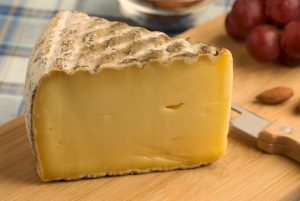 To produce a Tomme de Savoie, an average of 15 to 20 liters of milk is required. You will recognize it by its gray and speckled rind, as well as its white paste with slight openings. 6,500 tons are produced every year, based on milk from three types of cows: Montbéliarde, Tarine, and Abondance.
Our recipe idea: sautéed ham with Tomme de Savoie.
Allow 15 minutes for preparation and 30 minutes for cooking. For two people, plan for: 400 g of potatoes, 175 g of Tomme de Savoie, 65 g of smoked raw ham, half an onion, 15 g of butter, 1 tablespoon of sunflower oil, nutmeg, pepper, and salt.
The Beaufort
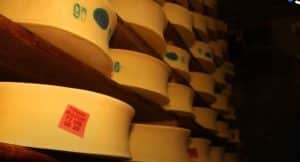 The Beaufort is one of the pressed cooked cheeses. Renowned for its taste, it has a firm texture at first, then melts. Its diameter is on average 54 cm and its weight is 40 kg. Production is limited to 5,000 kg of milk per cow per year. As for its aging, it must be at least 5 months.
Our recipe idea: Beaufort waffles.
Allow 10 minutes for preparation and the same time for cooking. To make this recipe for 2 people, you will need: 80 g of flour, 50 g of Beaufort, 125 ml of milk, 35 g of butter, 1 egg, salt, and parsley.
The Raclette de Savoie
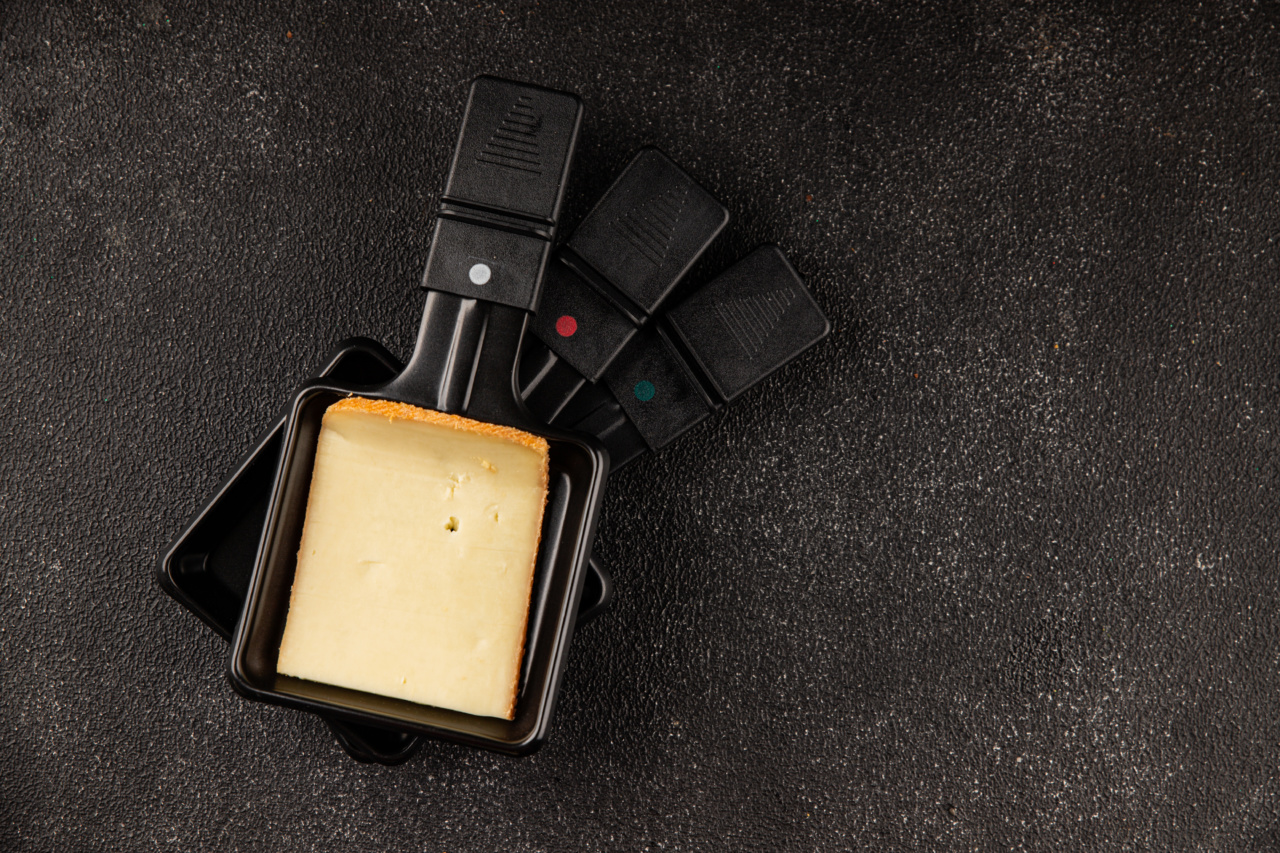 A Raclette de Savoie wheel weighs on average 6 kg. To recognize it, just look for the term “de Savoie,” as well as the IGP logo.
It can be found in dairies, directly from producers, or at cheese shops.
Our recipe idea: gratin of crozets with Raclette de Savoie.
Allow 15 minutes for preparation and 45 for cooking. For this recipe, you will need for two people: 150 g of plain crozets, 125 g of Raclette de Savoie, 1 clove of garlic, 300 g of porcini or chanterelles, 125 g of thick cream, 25 g of butter, vegetable broth, and nutmeg.
Other Savoie cheeses
While the cheeses mentioned above are certainly the most emblematic of Haute-Savoie and Savoie, other cheeses are produced near Annecy. Here are a few.
The Tome des Bauges
The Tome des Bauges is, as its name indicates, produced in the Bauges massif. Made for centuries, this cheese has an ivory or yellow paste, as well as a gray rind with relief.
If it is spelled with a single “m,” it is because the origin of the name comes from “toma,” which means in patois “cheese made in the alpine pastures.” The Tome des Bauges weighs between 1.1 and 1.4 kg, with a diameter between 18 and 20 cm.
Our recipe idea: pumpkin crumble with Tome des Bauges.
You will need about 1 hour and 45 minutes to make this recipe, including preparation and cooking. To make this crumble for two people, you will need: 250 g of pumpkin, 25 g of Tome des Bauges, half an onion, and cumin. For the crumble: 90 g of flour, 60 g of semi-salted butter, 30 g of Tome des Bauges.
The bleu de Bonneval
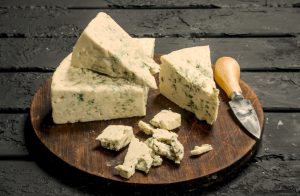 The bleu de Bonneval is produced only in Haute-Maurienne. This blue cheese has a paste that is both soft and melting.
If you are used to eating cheeses with little flavor, you may be surprised by the strength of the bleu de Bonneval and perhaps find a bit of bitterness.
Our recipe idea: mousse with bleu de Bonneval
Allow 2 to 3 hours in the fridge for the mousse to set. For ingredients, you will need, for two people: 125 g of bleu de Bonneval, 0.25 cl of fresh cream, 2 sheets of gelatin, 3 slices of raw Savoie ham, salad, salt, and pepper.
The Chevrotin
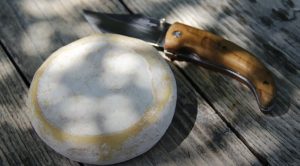 The Chevrotin is a handmade cheese. Its paste is soft and creamy. It weighs between 250 and 350 grams, with a height between 3 and 4.5 cm. 60 tons of Chevrotin AOP are produced every year by 24 producers and 5 affineurs. This represents 500,000 liters of milk.
Our recipe idea: thin tart with Chevrotin and vegetables
20 minutes of preparation, 1 hour and 15 minutes of cooking. For this recipe, you will need: a pizza dough, 50g of Chevrotin, onion and garlic, cherry tomatoes, 1 zucchini, 1 red pepper, and a yellow one, olive oil, and thyme.
The Emmental de Savoie
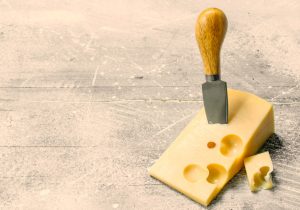
The Emmental de Savoie is produced at a rate of 3,000 tons per year and requires a minimum of 75 days of aging. To produce a wheel, 850 liters of milk are needed.
It is recognized by its yellow rind and its paste dotted with openings. To be sure of the origin of Emmental de Savoie, just look for the IGP logo on the label.
Our recipe idea: pasta with spinach and Emmental de Savoie cream
10 minutes of preparation, 20 minutes of cooking. For two people, you will need: 45 g of Emmental de Savoie, 250 g of pasta, a few spinach sprouts, 20 g of butter, 25 g of flour, 30 cl of warm milk, 30 g of cream, nutmeg, salt, and pepper.
Quality guaranteed by a strict specification
The specification to be respected for the production of Savoie cheeses is comprehensive and particularly strict. On average, more than 2,700 technical visits are carried out each year by technicians, with the aim of continually improving the quality of the cheeses produced. Thus, a cheese that deviates too much from the average in terms of weight or diameter will be downgraded or rejected.
IGP and AOP
IGP and AOP are two designations that guarantee the quality of cheeses. The first is the Protected Geographical Indication, while the second is the Controlled Designation of Origin. Regular checks are organized with cheese producers to ensure that the specifications imposed by the certifications are respected.
It should also be noted that the different cheeses are subject to a tasting grid that is specific to them. This concerns not only taste and texture but also the appearance and shape of the cheese.
Activity ideas to discover Savoie cheeses
If you want to learn more about local cheeses, why not seek out the source directly? Some farms open their doors and offer to follow the cheese-making process. You can also enjoy the playful spaces set up within dairy cooperatives, such as in Thônes or in Saint-Sorlin d’Arves, near the Sybelles.
Book a wine and cheese tasting in Annecy
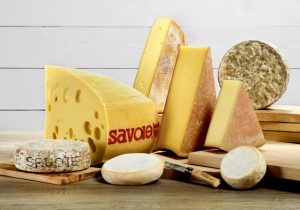
If you want to discover the authentic know-how of Haute-Savoie and its cheese specialties, we invite you to immerse yourself in a tasting of these delicious local cheeses, accompanied by a good wine produced in the region.
Go to the alpine pastures during the summer season
 In summer, we recommend enjoying a hike to the alpine pastures. You can easily meet cheese producers there and talk with them.
Some will even offer you a small tasting and the opportunity to buy products directly on site.
The Savoie Cheese Route, an excursion near Annecy
The Cheese Route allows you to discover Savoie cheeses and their connection to the territory in a fun way. 76 visits can be made between Savoie and Haute-Savoie. On these occasions, different themes can be addressed, such as the valorization of grass or even the production from raw milk.
The Savoie cheese festival
 Every year, the Savoie cheese festival takes place. It is an unmissable event in the surroundings of Annecy.
The cheese festival takes place in Haute-Savoie during the month of June. During this weekend, activities and events are offered around the theme of cheese. Access is free, and it is possible to eat directly on site.
The goal of this event is to bring together the actors of the cheese sector and the local population.


